
Logos vs Accordance: A Head-to-Head for 2026
By Sankalp Jonna · Last reviewed 2026-05
How we tested
Every app here was installed and used personally. We capture raw findings — typed notes, screenshots, screen recordings, voice memos — and the writing is AI-assisted from those raw notes. Scores, rankings, and "best for / skip if" calls reflect our actual experience with each app. Read the full methodology →
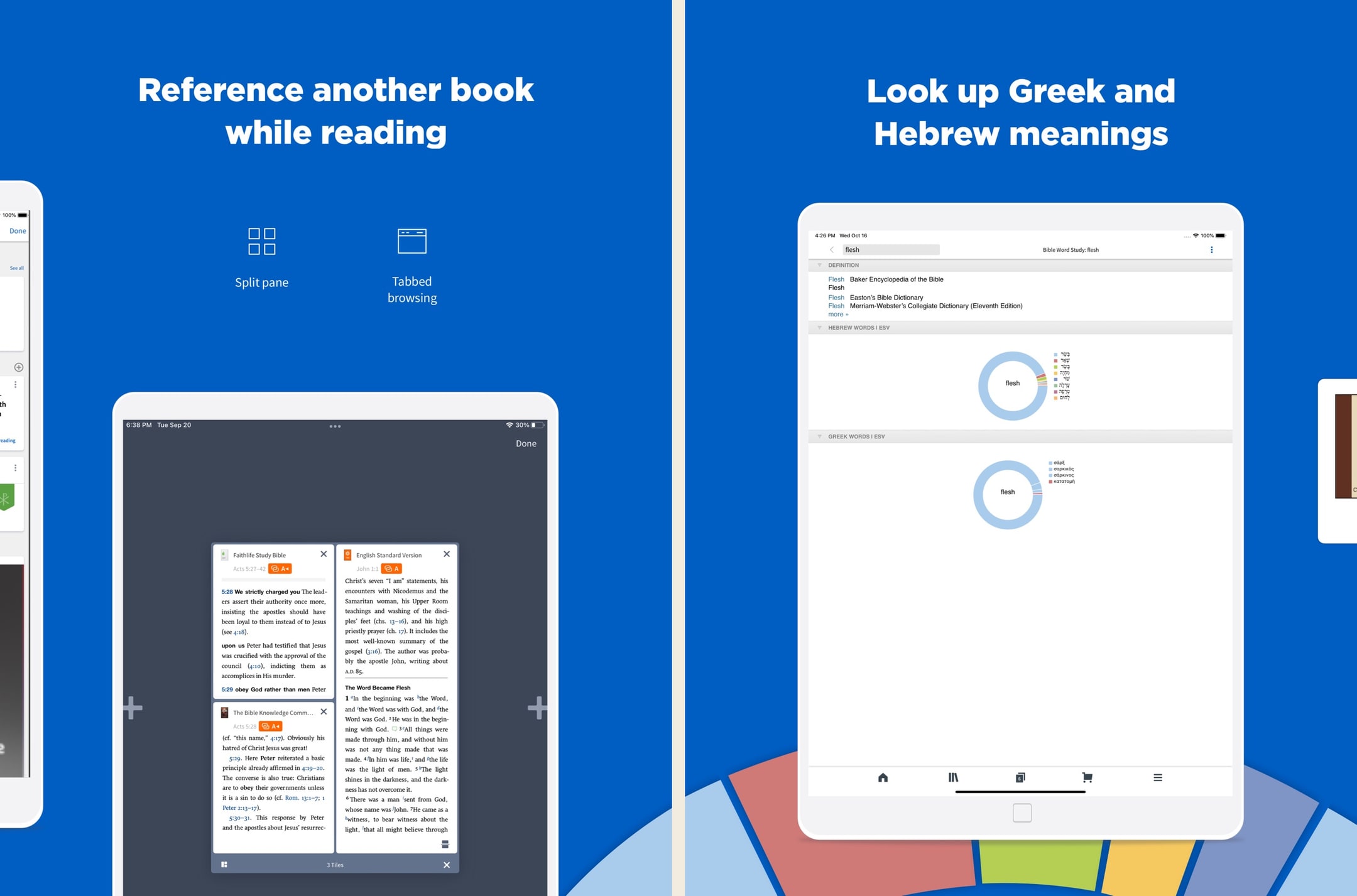
Logos Bible Study
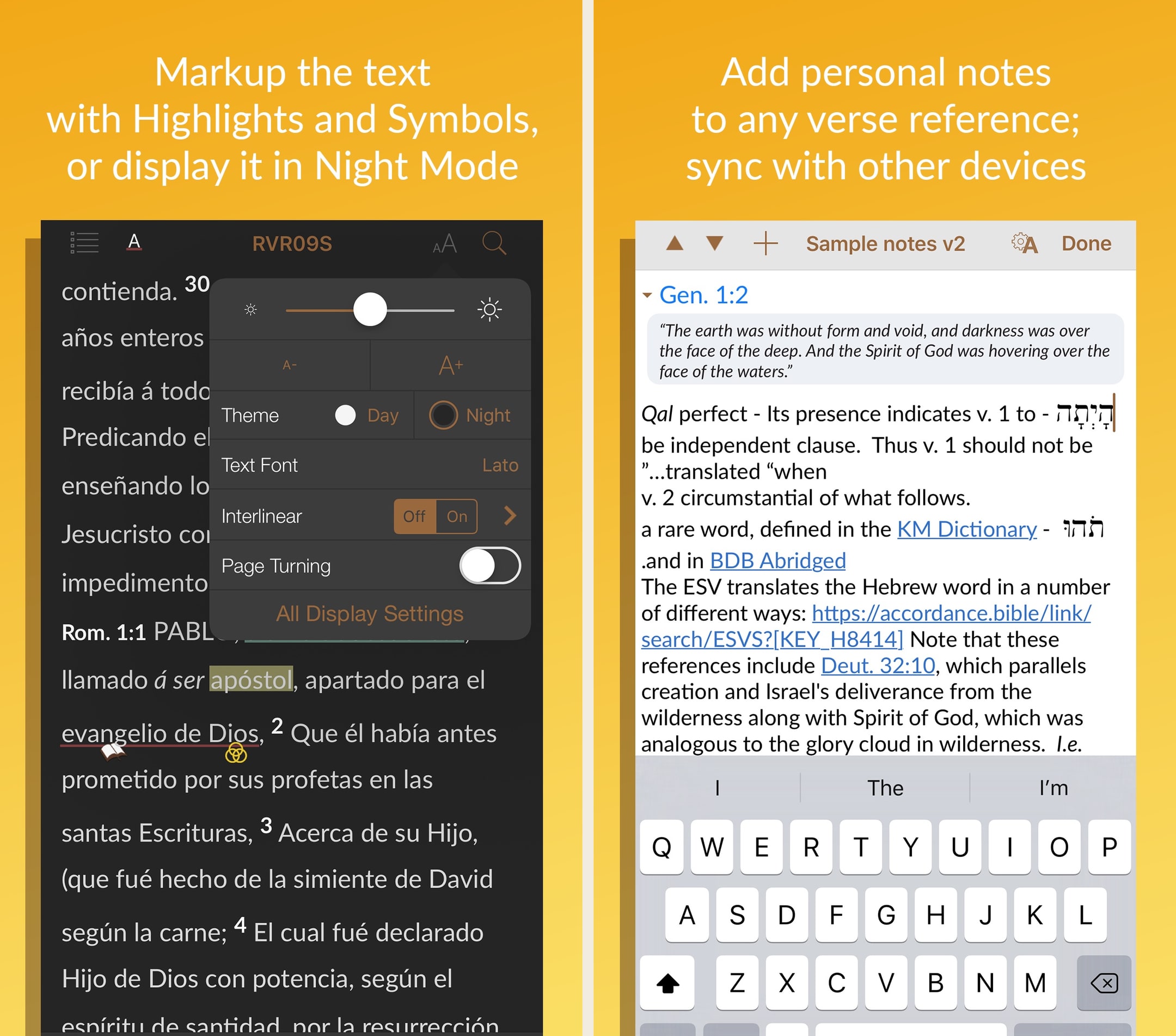
Accordance Bible Software
Quick verdict
Choose Logos Bible Study if
- You're on Windows or you split between Mac and Windows and need a single platform that runs natively on both.
- Your weekly work demands the deepest commentary catalog — niche academic, denominational, and historical resources Accordance doesn't carry.
- You want AI study features (Logos AI assistant) and ongoing platform investment funded by subscription.
- You're already in the Faithlife ecosystem (Sermons, Proclaim, Equip) and want one tool tied to that workflow.
- You're comfortable paying $9.99-$24.99/month indefinitely in exchange for ongoing access to the largest catalog.
Choose Accordance Bible Software if
- You're a Mac user and you want a Bible study app that genuinely sings on Apple Silicon — searches and library loads run faster than the equivalent in Logos.
- You hate subscriptions and want every resource you buy to be permanently yours — Accordance is ownership-only by design.
- $49 starter license plus one or two flagship resources is closer to your budget than a Logos base package.
- You want a less-cluttered, less-marketed UI without the constant Faithlife ecosystem upsell.
- You're a pastor or scholar whose research is rooted in original languages (Greek, Hebrew, Aramaic, Syriac) and you appreciate Accordance's seminary-academic heritage.
Side-by-side
Feature-by-feature, the way we'd lay it out at a kitchen table.
| Feature | Logos Bible Study | Accordance Bible Software |
|---|---|---|
| Pricing model | Subscription-first ($9.99-$24.99/mo) plus base packages | $49 starter license + one-time resource purchases; no required subscription |
| Free trial / tier | Free Logos app with basic library | 90-day free trial with 60+ included resources |
| Subscription option | Premium $9.99/mo, Pro $14.99/mo, Max $24.99/mo | None — purchases only |
| Base / starter price | $294.99-$10,799.99 base packages | $49 starter license + resources $10-$1,000+ each |
| Best-running platform | Cross-platform; strong on Windows and Mac | Mac-first; iOS, iPad, Windows, Android available |
| Library breadth | Largest catalog in the category — academic, denominational, niche | Smaller catalog but covers most flagship commentaries |
| Original-language tools | Research-grade; deepest morphological and syntactic datasets | Research-grade; long history of seminary-level scholarship |
| AI features | Logos AI assistant (chat, smart search) included in subscription tiers | No AI |
| Mobile experience | Improved companion to desktop | Companion app, weaker than the Mac/Windows desktop client |
| Best-fit reader | Pastors, scholars, and students who want the deepest possible catalog | Mac-using pastors and scholars who prefer ownership and speed |
Setup & onboarding
Core features
Pricing breakdown
Support & community
Mobile experience
Verdict
Warmpeach — coming soon
Join the Bible chat app waitlist
Why this comparison comes up
Two Bible study platforms have credibly served working pastors and seminary scholars for decades: Logos and Accordance. Everyone else in the category is either lighter (Olive Tree, Blue Letter Bible) or different (YouVersion, Bible Gateway). When someone asks "what should I use to prep sermons," the realistic shortlist is two products long, and the comparison comes up because the choice is genuinely consequential.
Logos is the bigger company with the deeper catalog and the more aggressive product roadmap — AI features, subscription tiers, a Faithlife ecosystem of related products, and Windows-first cross-platform reach.¹ Accordance is the smaller company with the cleaner UI, the faster Mac performance, and the ownership-only pricing model that has kept it loved by Mac-using pastors and academic biblical scholars since the 1990s.²
The decision splits along three axes: platform (Mac vs Windows vs cross-platform), pricing philosophy (subscription vs ownership), and catalog depth (deepest possible vs deep enough). Get those three answers right and the choice is straightforward. Get them wrong and you'll spend the next decade building a library on the wrong platform.
The buyer profile
The Logos buyer is usually a Windows user, or a Mac user who needs Windows compatibility for a shared workplace, or a pastor whose denomination or seminary has standardized on the platform. They're comfortable with subscriptions, they value catalog breadth, and they want their Bible software to keep evolving with new tools (notably AI) baked in. Most working pastors at multi-staff churches in the U.S. use Logos because that's what their institution licensed.
The Accordance buyer is usually a Mac user — often a pastor at a smaller church, a seminary professor, or a serious lay scholar — who values speed, simplicity, and ownership. They've often been burned by subscription software in other categories and want their Bible library to outlast the company that sold it to them. Accordance's user base skews academic; the product has a long heritage in seminary classrooms and biblical-languages programs.
The Mac-pastor question
This is where the comparison gets sharp. A Mac-using pastor with no Windows constraint and no urgent need for niche academic commentaries has a genuine choice between the two. Logos runs on Mac, and runs well, but Accordance was built for Mac and runs faster on Apple Silicon than Logos does. The interface is cleaner. The pricing is simpler. The trade-off is a smaller catalog and no AI features. Many Mac-using pastors who try both end up on Accordance and stay there for years.
A Windows-using pastor or a Mac-Windows mixed-shop user has a much narrower choice — Accordance runs on Windows but Mac is unmistakably its first home, and serious Windows users typically end up on Logos by default.
What stuck with us in actual use
Two things stuck after running both for several weeks.
First: Accordance's speed on Apple Silicon is genuinely impressive. Library searches across a large catalog return faster than the equivalent in Logos, by a margin you can feel rather than just measure.³ For a pastor running multiple searches in a sermon-prep session, the cumulative time savings add up.
Second: Logos's AI assistant, grounded in your own library, is a real product — not a marketing checkbox. Asking research-style questions and getting answers that draw on the commentaries and lexicons you already own is a workflow Accordance doesn't currently match.¹ For users who want AI study features, the comparison ends here; Logos is the only option of the two.
The library lock-in problem
The single most underrated fact about choosing between Logos and Accordance: once you've built a serious library on either platform, switching is expensive. Resources don't transfer. Your notes don't transfer. Your highlights and tags don't transfer. Your muscle memory doesn't transfer. A pastor with $1,500 in Logos resources who decides Accordance would have been a better fit is looking at a $1,500 sunk cost plus another $500-1,000 to rebuild on the new platform, plus weeks of relearning the UI.
This is why the first decision matters more than the marginal feature differences in any given year. Choose carefully, then commit. The platform you start on is, in practice, the platform you'll be on a decade later.
The pricing reality
Logos's subscription model can look expensive in raw monthly numbers, but the platform is genuinely improving — AI assistant, search refinements, mobile updates, ongoing catalog growth — and a subscriber rides those improvements without additional purchases. Accordance's ownership model can look cheaper in monthly numbers but slower to evolve; you buy a resource and you keep it, but the platform itself updates more incrementally.
The honest math depends on whether you'll use the ongoing platform investment. A user who barely opens AI features and doesn't care about new search tools is overpaying for Logos's subscription. A user who runs heavy daily research and benefits from every monthly improvement is underpaying for Logos's subscription, even at $24.99/month for Max.¹
When to pick which
Pick Logos if you're on Windows, your work demands the deepest commentary catalog, or you want AI features and ongoing platform investment. The breadth and the subscription-funded roadmap are genuinely valuable for working pastors at busy churches.
Pick Accordance if you're a Mac user, you value ownership over subscription, and your work doesn't depend on niche academic commentaries or AI tooling. The speed advantage and the simpler pricing make Accordance a quieter, less-cluttered tool for users who'd rather their Bible software get out of the way.
Don't switch midstream. If you've already built a library on either platform, the lock-in is real and the migration cost rarely justifies the move.
What real users say
Real-user reviews
I love this app.
I have used many Bible apps and software and when by the grace of God I was led to the Logos web site, I was like a kid in a candy store with the permission to eat anything I wanted. I still keep the other Bible software but primarily I use Logos and the more resources you purchase the more powerful your Bible software becomes you only need to purchase what you need, I am just a lay person some of the packages I can't use at the present time. I think that any investment into The things concerning God is prosperous. To whom it may concern I hope anything that I say being just a lay person who is still reaping the benefits of what I don’t deserve which is to walk in the spirit of God and stumbling, falling and bouncing off the walls , if you will, and still reaching and walking after the perfection and that perfection being Christ. So this is my second time writing a review for this. I can barely find the words most glorious I don’t know powerful Bible software that I know to date many preachers use it so all I got to say is I hope I’m understood because I am not erudite and speech, but there are no lies coming out of my mouth, I just love LOGOS though when I found out about it so many books, I haven’t even read yet by the grace of God I’m gonna spend my life in his service and his word praise be to God, peace and spiritual prosperity to all who read this, I said the spirit of Godand the spirit does not stay with you always which is why we have to keep walking after pray for you. You know what I’m talking about. I’m saying I’m not saying God.
— Hldavis7455
GO DEEPER
I am really impressed with the abilities the Logos software enables me to have. Notes on scriptures. Word meanings and their origins. The original Hebrew and its pronunciations. Bible word studies and word searches. Cutting my search time down immensely so I may study more in depth and for longer. I can discover more scriptures using words I want to understand more fully in the amount of time it takes me to type the word. I can even access a nightly devotion and never lose my place. I can do everything on my phone so I am always ready to show my friends. It’s not just for pastors. It’s not just for sermon writing. This allows me a deeper study with My Savior. This is education at my desk or in my pocket so His word is ever before me. It’s an app with easy to use tools for the layman that he too may explore his Bible more fully and ‘Knock’ at the door. Seek and you may find. This allows me to seek ever more deeply and quickly. As a mom of five, time to study is short. The ability to go from page to page and reference to reference quickly is important. The ability to use the app anywhere helps because you never know when you may get a free moment or the urge to seek understanding.
— Jgourle3
Real-user reviews
Great app, but a few user interface issues
Accordance is one of the best Bible study apps available, period. I use it regularly, both for personal reading and devotion, and in my studies and research. Version 3.4 has been much more stable than previous versions, however, I still run into user interface issues. For example, if I want to switch to a different book or resource while in reader view, I try to click in the top left corner, but 95% of the time, or more, it only brings up the instant details pop up or the verse tool. I have literally spent over 2 minutes just trying to change Bible books in the middle of sermon while trying to keep up with the teaching. If there is a gesture just for bringing up the resource selector, I am not aware of it. Also, the divider between the two text panes always changes position when switching between apps. I usually keep the divider halfway between my English and Hebrew/Greek texts. When I switch to my note taking app and then switch back, the divider has jumped to the ⅔ of the screen in English text and ⅓ in original language. That means every time I switch, I also have to reposition the divider. This is frustrating and should be easily fixed. As it is, sometimes, if I’m trying to take notes in the middle of a sermon or teaching, I don’t use Accordance, but use a simple Bible reader app, just because I get frustrated with the user interface issues. I hope OakTree Software takes care of this, because when Accordance works properly, it’s probably my favorite Bible app.
— j micah
Not a Fan of App
First -- I'm not particularly happy that I'm basically forced into writing a review. The "Give Us a 5-Star Review" notification pops up every time I open the app. The only options are to either write a review or press the "maybe later" button. Turns out, the "maybe later" is every time I open the app. Not cool. Second -- I would give this app 5 stars if it weren't for the fact that it locks up on the loading screen far too frequently (actually, even once would be too many times). I'm forced to delete the app, re-download it, and then pick through the many books, commentaries, etc. to download as well. I have found that the fewer items I select, the better chance I have of not needing to repeat the whole process. This is very frustrating, since I have purchased many, many resources over the years. Even when I download only a few items, the app may work well for a couple of weeks but then lock up again (without adding other items). Again, this is extremely frustrating -- especially in light of how much money I've paid over the years.
— Theophilus7777
Warmpeach — coming soon
A Bible chat app — pastor and therapist in one.
Warmpeach is a Bible chat app that blends a pastor's care with a therapist's questions, grounding every reply in scripture. Join the waitlist and we'll email you when it opens up.
Sources
-
Logos Bible Study — App Store listing (subscription tiers, base packages, AI assistant grounded in library). Accessed 2026-05-11. https://apps.apple.com/us/app/logos-deep-bible-study/id336400266
-
Accordance Bible Software — official site (ownership pricing model, Mac-first heritage). Accessed 2026-05-11. https://www.accordancebible.com/
-
Hands-on testing notes captured during 2026-05 — Accordance vs Logos library-search speed comparison on Apple Silicon. Raw screenshots in our internal archive.